

Exams, Assessment and Revision
Students will take exams throughout their time at Stanborough, not just at the end of their school career.

End of year exams start in Year 7 and carry on through the rest of the school. Subjects may also undertake smaller exams and tests at other key times during the year, for example, at the end of a unit of work. In Years 10 and 11 students also have mock exams to help prepare them fully for all the external exams they will sit and to support them to reach their full potential.
Revision
Practical Help With Revision
All research indicates that students learn by “doing” rather than just reading. Note taking and reducing information to card and memorising it is essential but a variety of methods will help to improve students’ ability to retain information and make the tedious element of revision seem less severe. Using revision schedules with revision guides, produced by departments, to determine which areas need to be studied are a useful starting point.
We recognise that as a parent it is sometimes hard to know how to support your child. Below is a link to a guide that has been written to support parents and carers and gives handy tips about how to support your child as well as an overview of some of the main subjects including tips for how to support revision.

Exam Access Arrangements
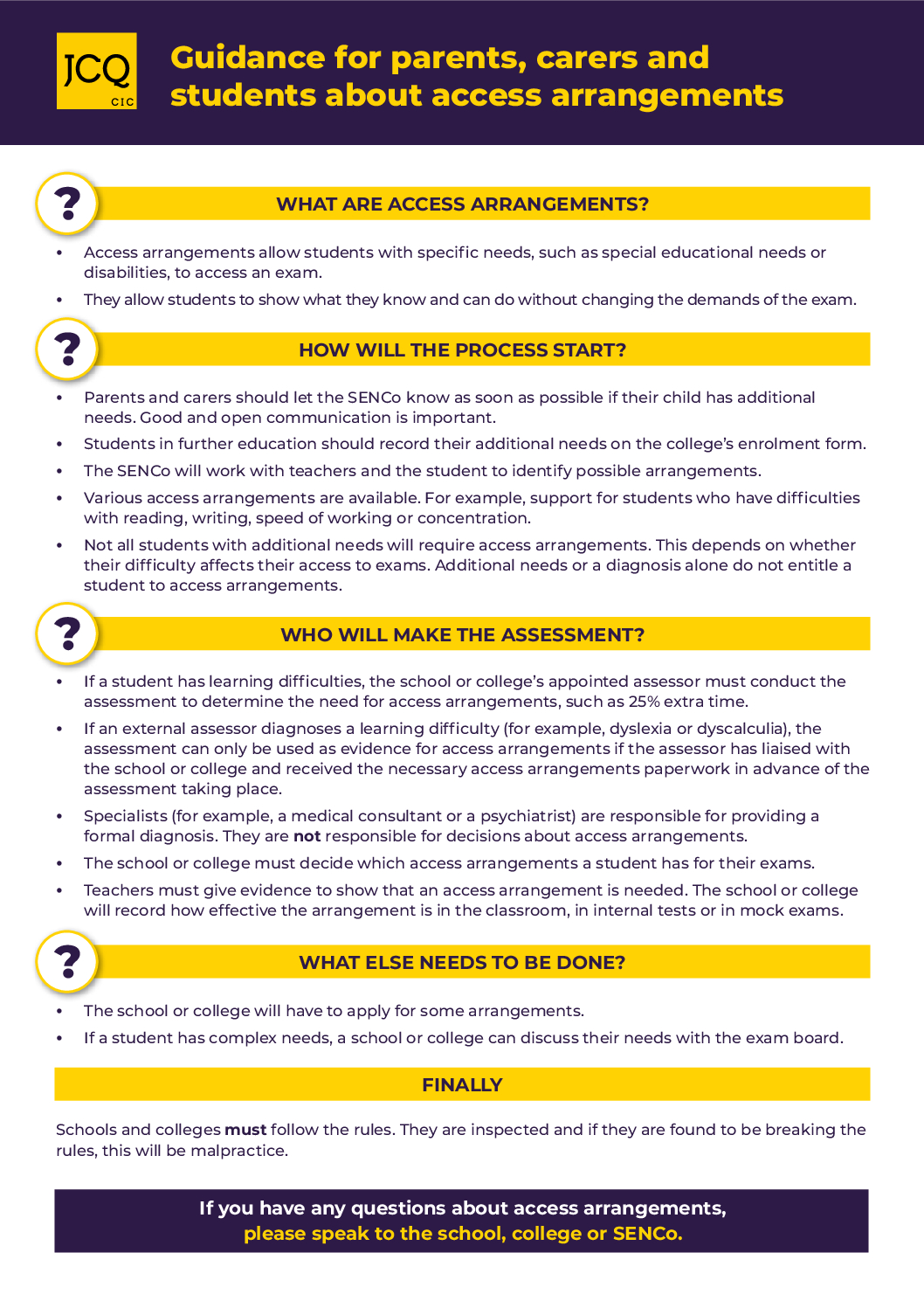
At Stanborough we are committed to ensuring that all students have fair and equal access to examinations. Some students may require additional support to enable them to demonstrate their knowledge and skills effectively. These supports are known as Exam Access Arrangements (EAA).
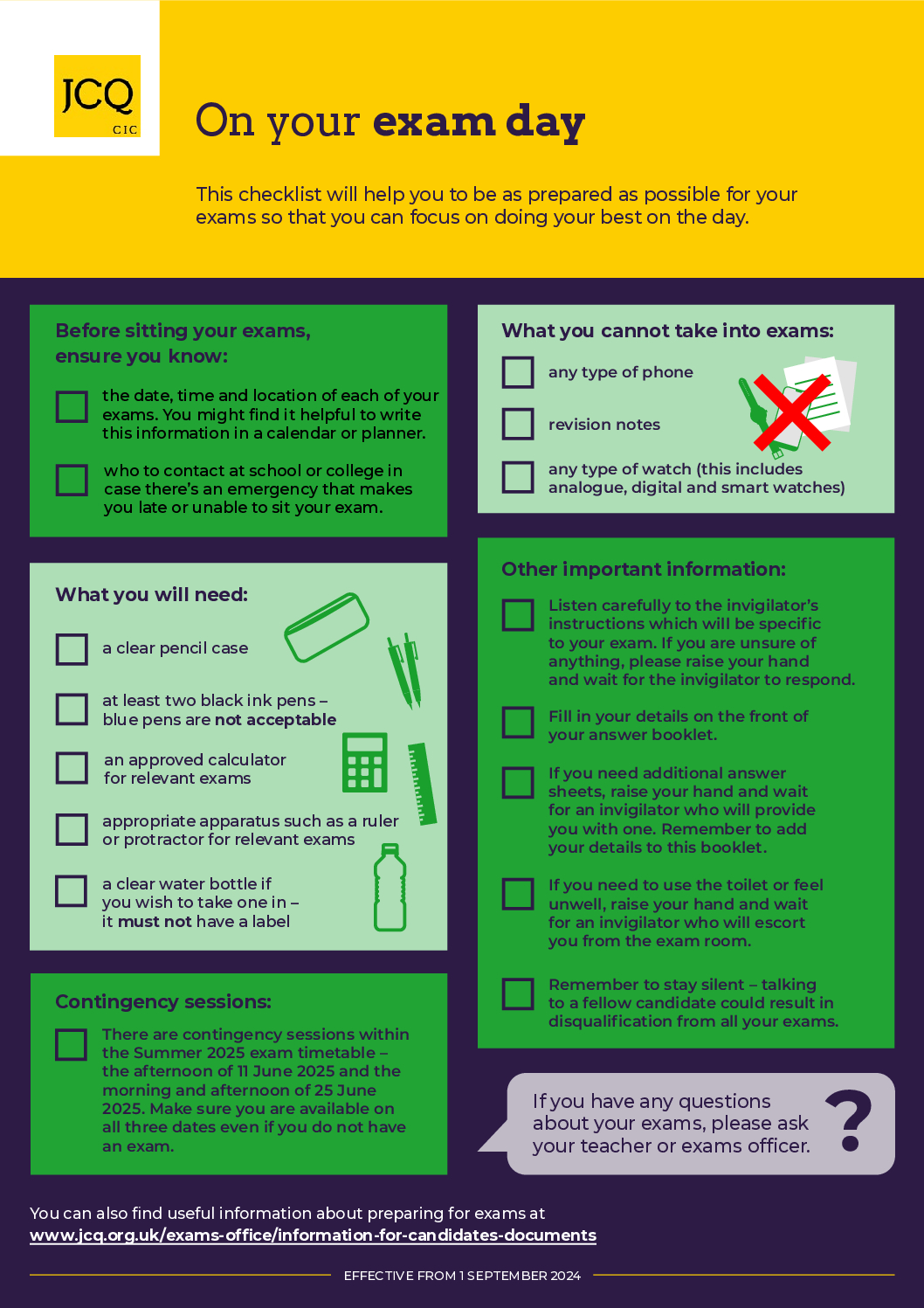
Access arrangements are agreed in advance of examinations and are based on a student’s individual needs and their normal way of working in school. The regulations governing these arrangements are set nationally by the Joint Council for Qualifications (JCQ), to create consistency in how exams are run. We have to abide by the JCQ directives and are inspected by JCQ annually to ensure we are following the regulations and that unfair advantages have not been given to any student.
According to JCQ guidance, access arrangements are designed to “enable students with special educational needs, disabilities or temporary injuries to access assessments without changing the demands of the assessment.” This means that arrangements provide appropriate support without giving any student an unfair advantage.
Examples of access arrangements may include extra time, the use of a reader or scribe, supervised rest breaks or the use of a word processor. These are only granted where there is clear evidence of need and where the arrangement reflects the student’s usual way of working in lessons and internal assessments.
It is important for students and parents to understand that access arrangements are not awarded automatically and cannot be granted simply on request. Schools must follow strict JCQ regulations, gather appropriate evidence and in some cases apply for approval from the relevant awarding bodies. For certain access arrangements, the school employs an external Specialist Teacher to carry out a formal assessment to establish whether a student meets the criteria for the school to consider these arrangements.
We work closely with students, parents and staff to identify needs at an early stage and to ensure that any approved arrangements are in place well before public examinations. If you have any questions or concerns, please contact our SENDCo or Examinations Officer, who will be happy to advise and support you through the process.
Please take a look at the documents below for further details on Access Arrangements.